

Finding a place to live is one of the first major challenges many newcomers face after arriving in Canada.
Whether you’re moving to Canada for work, school, or to join family, finding the right home can make your transition much easier. But Canada’s rental market can be unfamiliar, especially if you have never rented a home there before.
You may have questions like:
- How much does it cost to rent an apartment in Canada?
- What documents do landlords ask for?
- How does a rental application work?
- Do you need Canadian credit history?
- How much is a rental deposit?
- Should you rent alone or find a roommate?
- How do you know if a rental listing is legitimate?
- Which neighborhood is right for you?
Don’t worry—you don’t need to know everything on your first day.
With some research and preparation, finding a place to live in Canada can become much more manageable.
If you’re still deciding where in Canada to settle, you may also want to read Which Province Is Right for You? A Newcomer’s Guide to Choosing Where to Settle in Canada before choosing a city or neighborhood.
Small Tip: Your first home in Canada doesn’t have to be your forever home. Focus on finding a safe, practical, and affordable place that works for your first stage of settlement.
1. Decide What You Can Afford Before You Start Looking
Before browsing rental listings, determine how much you can realistically spend each month.
Your housing budget shouldn’t be based only on the advertised rent.
Consider additional expenses such as:
- Electricity
- Heating
- Water
- Internet
- Tenant insurance
- Parking
- Transportation
- Laundry
- Furniture
- Household supplies
Some rental properties include certain utilities in the monthly rent, while others require tenants to pay them separately.
For example, an apartment advertised at $1,800 per month may not actually cost you only $1,800.
If utilities, internet, parking, and other expenses are extra, your actual monthly housing cost could be considerably higher.
Create a Simple Housing Budget
Before signing a lease, calculate:
Monthly rent + utilities + internet + transportation + other housing expenses = your estimated monthly housing cost
Then compare that amount with your expected income and other living expenses.
Small Tip: Leave some room in your budget for unexpected expenses. Your first few months in Canada may involve costs you didn’t anticipate.
For a broader overview of the expenses and preparation involved in moving, see The Ultimate Moving to Canada Checklist: What to Prepare Before You Leave and Before You Arrive.
2. Research the City and Neighborhood
Finding the right home isn’t just about finding the right apartment.
The neighborhood matters, too.
Before choosing a location, research:
- Distance to work or school
- Public transportation
- Grocery stores
- Pharmacies
- Healthcare facilities
- Schools
- Parks
- Restaurants
- Community centers
- Libraries
- Places of worship
- Safety information
- Average rental prices
A cheaper apartment far away from your workplace may not save you money if you spend several hours commuting every day.
Likewise, an apartment close to work might cost more but save you significant transportation expenses and time.
Think About Your Daily Routine
Ask yourself:
“What will my typical weekday look like if I live here?”
Imagine your morning commute, grocery shopping, getting to work, doing laundry, and getting home at night.
A convenient neighborhood can make a huge difference in your quality of life.
3. Understand the Different Types of Housing
Newcomers may encounter several types of rental housing in Canada.
Apartment
An apartment is a common option, particularly in larger cities.
You may rent:
- A studio
- One-bedroom apartment
- Two-bedroom apartment
- Three-bedroom apartment or larger
Condo
A condominium, commonly called a condo, is an individually owned unit within a larger building or complex.
You may rent a condo directly from the owner or through a property manager.
Basement Apartment
Basement units are common in some Canadian cities.
They can sometimes be more affordable than full apartments, but carefully check:
- Windows and emergency exits
- Natural light
- Ceiling height
- Heating
- Moisture or water issues
- Noise
- Whether the unit is legally permitted as a rental
House
You may also rent an entire house, townhouse, or part of a house.
This can be useful for families but generally comes with higher overall costs and more responsibilities.
Shared Accommodation
Sharing a home or apartment with roommates can reduce housing costs.
This can be particularly useful for students and newcomers who are establishing themselves financially.
4. Where Can You Search for a Rental?
There are many ways to search for housing in Canada.
You can explore:
- Online rental platforms
- Real estate websites
- Property management companies
- Local community groups
- University or college housing resources
- Settlement organizations
- Recommendations from friends and family
- Local rental signs
When searching online, compare several listings rather than immediately choosing the first property you see.
Look at:
- Monthly rent
- Location
- Number of bedrooms
- Utilities included
- Parking
- Laundry
- Furnished vs. unfurnished
- Lease length
- Available move-in date
Small Tip: If a rental looks dramatically cheaper than similar properties in the same neighborhood, investigate carefully before sending money or personal information.
5. Prepare Your Rental Application
Once you find a property you like, the landlord or property manager may ask you to complete a rental application.
Requirements vary depending on the province, landlord, and property.
You may be asked for information such as:
- Your name and contact information
- Employment information
- Income information
- References
- Rental history
- Identification
- Credit information or permission for a credit check
As a newcomer, you may not have a Canadian rental history or Canadian credit history yet.
That doesn’t necessarily mean you cannot rent.
You may be able to strengthen your application with other legitimate information, such as proof of employment, an employment offer, references, or other documents the landlord is legally allowed to request.
Small Tip: Ask the landlord what documents are required before submitting your application so you can prepare everything in advance.
6. What If You Don’t Have Canadian Credit History?
This is a common concern for newcomers.
If you recently arrived in Canada, you may not have an established Canadian credit history.
A landlord may therefore look at other factors when assessing your application, depending on applicable provincial or territorial rules.
You could potentially provide:
- Proof of employment
- An employment offer letter
- Proof of income
- References
- Previous rental references
- Evidence of savings where appropriate
- Other supporting documentation requested legally
Don’t assume that having no Canadian credit history automatically means you cannot rent.
Instead, communicate openly with potential landlords and ask what alternatives they accept.
If you want to understand how credit works beyond the rental application, read How Credit Works in Canada for Newcomers: A Beginner’s Guide to Building Credit.
7. Understand Your Lease Before Signing
A lease is a legal agreement between you and your landlord.
It sets out important details about your tenancy, including things such as:
- Monthly rent
- Payment date
- Length of the tenancy
- Responsibilities of the tenant
- Responsibilities of the landlord
- Utilities
- Rules regarding pets
- Parking
- Maintenance
- Other terms and conditions
Read the entire lease before signing it.
Don’t sign a document simply because you are excited about getting the apartment.
If something is unclear, ask questions.
You should understand exactly what you’re agreeing to.
Important Questions to Ask
Before signing, ask:
- How much is the monthly rent?
- Which utilities are included?
- How is rent paid?
- How long is the lease?
- What happens when the lease ends?
- Is parking included?
- Is laundry available?
- Are pets allowed?
- Who handles repairs?
- Are there additional fees?
- What are the rules for ending the tenancy?
Rental rules differ across Canada’s provinces and territories, so check the official residential tenancy information for the province or territory where you plan to live.
8. Understand Deposits and Other Upfront Costs
Moving into a new home can require several upfront expenses.
Depending on where you live and the type of rental, you may encounter costs related to:
- First month’s rent
- Security or damage deposits where legally permitted
- Last month’s rent where applicable
- Key deposits where legally permitted
- Utility setup
- Tenant insurance
- Moving expenses
Important: Rental deposit rules are not identical across Canada.
Each province and territory has its own tenancy legislation, including rules governing deposits and fees.
Don’t rely on advice from a friend who lives in another province.
For example, the rules that apply to a rental in Ontario may not be the same as those in British Columbia or Alberta.
Small Tip: Always check your provincial or territorial government’s current tenancy rules before paying a deposit or signing a lease.
9. Consider Getting a Roommate
For some newcomers, sharing accommodation can make the transition more affordable.
A roommate can help divide costs such as:
- Rent
- Utilities
- Internet
- Household supplies
- Sometimes furniture and other expenses
However, living with someone else requires careful consideration.
Before moving in together, discuss:
- Rent split
- Utility payments
- Cleaning responsibilities
- Food
- Guests
- Quiet hours
- Shared spaces
- Parking
- Lease responsibilities
If possible, understand whether you will be formally included in the rental agreement.
Small Tip: Saving money is important, but compatibility matters too. A slightly more expensive place with a reliable roommate may be better than a cheap arrangement that creates constant problems.
10. Don’t Rent a Place You Haven’t Properly Checked
Photos can be helpful—but they don’t tell you everything.
Whenever possible, view the property before signing a lease or sending money.
During a viewing, check:
Inside the unit
- Doors and locks
- Windows
- Heating and cooling
- Plumbing
- Appliances
- Lighting
- Floors and ceilings
- Signs of water damage
- Mold or unusual odors
- Noise levels
Around the building
- Laundry
- Parking
- Garbage disposal
- Building entrances
- Common areas
- Elevators
- Security features
Around the neighborhood
- Transit stops
- Grocery stores
- Street lighting
- Noise
- General condition of nearby properties
If you cannot physically visit because you’re still outside Canada, consider asking someone you trust to view the property or use a reputable rental or property-management service.
11. Watch Out for Rental Scams
Unfortunately, rental scams can target newcomers who are unfamiliar with the local housing market.
A scammer may copy a legitimate property listing, advertise a property that doesn’t exist, or claim they are unable to show the property because they are “out of the country.”
Warning Signs of a Possible Rental Scam
Be cautious if:
- The rent is far below similar properties
- The landlord refuses to show the property
- You’re pressured to pay immediately
- You’re asked to send money before seeing the property
- The landlord asks for unusual payment methods
- The listing contains inconsistent information
- The person refuses to provide a proper rental agreement
- They ask for excessive personal information
- The deal seems unusually good
One of the biggest warning signs is pressure.
A scammer may tell you:
“There are many people interested. Send the deposit today or you’ll lose the apartment.”
Don’t let urgency force you into a decision.
12. Be Careful With Personal Information
Rental applications can involve sensitive information, so be thoughtful about what you share.
Only provide information and documents that are legitimately required for the rental process.
Be especially cautious when:
- The person has not verified their identity
- You haven’t seen the property
- The rental listing cannot be independently confirmed
- You’re communicating through an unusual email address
- You’re being asked to send documents before basic details are established
If you’re uncertain, verify the landlord, property manager, or listing through independent sources.
13. Know Your Rights as a Tenant
As a newcomer, you should understand that being unfamiliar with Canada’s rental system does not mean you have no rights.
Residential tenancy laws protect tenants and landlords, but the specific rules depend on the province or territory.
These laws can cover matters such as:
- Rent increases
- Deposits
- Repairs and maintenance
- Privacy
- Entry by landlords
- Ending a tenancy
- Eviction procedures
- Dispute resolution
Before signing a lease, find the official residential tenancy information for your province or territory.
Don’t rely entirely on advice from social media or friends.
14. Keep Copies of Everything
Once you’ve found a home, create a folder for your rental documents.
Keep copies of:
- Your signed lease
- Rental application
- Receipts
- Deposit records
- Emails with the landlord
- Inspection reports
- Photos of the property
- Repair requests
- Important notices
Take photos or videos of the property’s condition when you move in, especially if there are existing marks, damage, or other issues.
These records can be useful if there is a disagreement later.
15. Think Beyond Your First Apartment
Your first home in Canada is often a starting point.
You may initially choose a smaller apartment, share accommodation, or live farther from the city center while you establish your career and finances.
As your circumstances change, you may eventually:
- Move closer to work
- Find a larger home
- Move to another neighborhood
- Buy a home
- Relocate to another city or province
Your first rental doesn’t have to define your entire Canadian experience.
Small Tip: Give yourself permission to start small. Stability is more important than having a perfect home immediately.
A Newcomer’s Rental Checklist
Before signing a lease, ask yourself:
🏠 Property
- Have I viewed the property?
- Is the property in a suitable neighborhood?
- Are the locks, windows, plumbing, and appliances in good condition?
- Is there adequate heating?
- Is laundry available?
💰 Money
- Can I comfortably afford the monthly rent?
- Do I know which utilities are included?
- Do I understand all permitted upfront costs?
- Have I budgeted for transportation and other expenses?
📄 Documents
- Have I prepared the required rental application documents?
- Do I understand the lease?
- Do I have a copy of the signed agreement?
- Do I have receipts for payments?
📍 Location
- Is the home close enough to work or school?
- Is public transportation convenient?
- Are groceries and essential services nearby?
- Does the neighborhood suit my lifestyle?
🔐 Safety
- Have I verified the landlord or property manager?
- Does the listing appear legitimate?
- Have I avoided suspicious payment requests?
- Have I documented the property’s condition?
Souad Tips: Find a Home, Not Just an Apartment
Finding a place to live in Canada is one of the most important steps in your newcomer journey.
But don’t feel pressured to find the perfect home immediately.
Start by understanding your budget. Research neighborhoods. Compare rental options. Prepare your documents. Read your lease carefully. Understand the rules in your province or territory. And most importantly, stay alert for rental scams.
Whether you choose a downtown apartment, a suburban home, a basement suite, or a shared house, the goal is the same:
Find a safe, comfortable, and affordable place where you can begin building your new life.
Canada is a big country, and there are many different communities to call home.
Take your time, do your research, and choose wisely.
Small Tip: Your first Canadian address is more than a place to sleep. It’s the starting point for your new chapter.
Ready for More Canadian Tips?
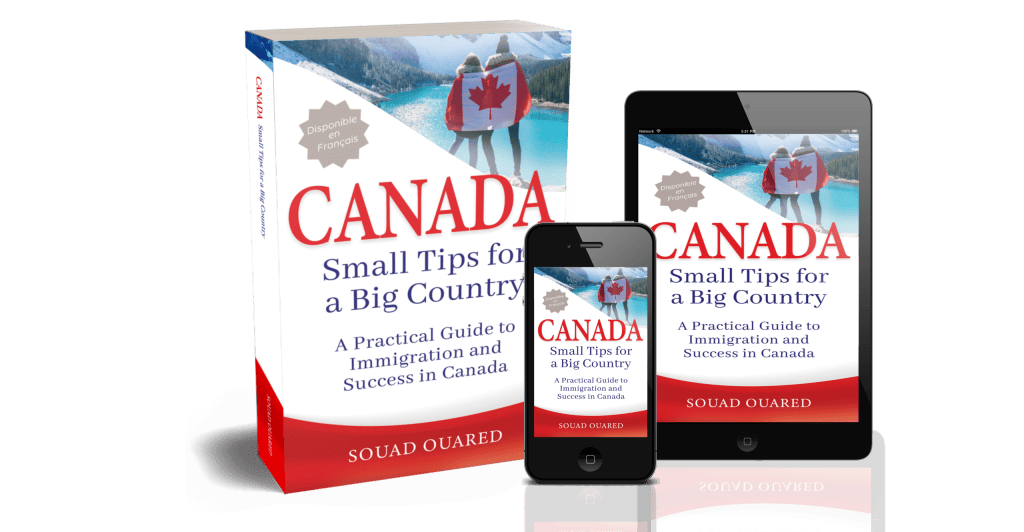
CANADA: Small Tips for a Big Country is a practical guide with a deeply human touch. Drawing on her own journey as an immigrant, more than 30 years of life in Canada, and the experiences of thousands of newcomers she has met and worked with, author Souad Ouared shares real-life advice that goes beyond what you can simply find online. From housing and employment to finances, culture, and everyday life, she shares what successful newcomers do differently, the mistakes to avoid, and the little things she wishes every newcomer knew.
Get your copy of CANADA: Small Tips for a Big Country on Amazon.