

Moving to Canada is an exciting new chapter, but your first few weeks can also feel overwhelming. There are documents to organize, a place to live, a bank account to open, healthcare to arrange, and many everyday details to figure out.
Having a clear first 30 days in Canada checklist can make the transition much easier. Instead of trying to do everything at once, focus on the most important tasks first and build from there.
This guide walks you through what to do during your first month in Canada, from your first week to the end of your first 30 days.
Your First 30 Days in Canada at a Glance
Here is a simple overview of what to prioritize:
Week 1
- Secure a place to stay
- Apply for your Social Insurance Number (SIN)
- Open a Canadian bank account
- Get a Canadian phone number
Week 2
- Apply for provincial or territorial health coverage
- Find a family doctor or primary care provider
- Learn how public transportation works
- Find out how to get a driver’s licence
Week 3
- Start your job search
- Prepare a Canadian-style resume
- Explore newcomer employment services
Week 4
- Create your first Canadian budget
- Learn how Canadian credit works
- Understand your tax responsibilities
- Register for government and community services
Throughout the month
- Meet people and build your community
- Learn about Canadian culture and everyday etiquette
- Give yourself time to adjust
Let’s look at each step in more detail.
Week 1: Take Care of the Essentials
Your first week should focus on the basics that will help you establish a stable foundation.
1. Secure a Place to Stay
If you arrived in Canada without permanent housing, finding a safe and practical place to live should be one of your first priorities.
Before signing a lease, consider:
- How close the location is to public transportation
- Distance to work or school
- Grocery stores and other essential services nearby
- Safety and the overall neighborhood
- Monthly rent and additional costs
- Utilities and internet
- Lease terms and conditions
- Deposit requirements
- Whether you need references or proof of income
If you’re still searching for accommodation, read How to Find a Place to Live in Canada: A Newcomer’s Guide for practical tips on rental applications, leases, deposits, neighborhoods, roommates, and common rental scams.
Tip: Don’t rush into signing a rental agreement simply because you are eager to settle in. Take time to understand what you are agreeing to.
2. Apply for Your Social Insurance Number (SIN)
Your Social Insurance Number, commonly called a SIN, is an important identification number in Canada.
You generally need a SIN to:
- Work legally in Canada
- Receive certain government benefits
- Access certain government programs
- File your income taxes
Make this one of your early priorities after arriving.
Keep your SIN information secure and avoid sharing it unnecessarily. It is an important piece of personal information.
3. Open a Canadian Bank Account
Having a Canadian bank account will make everyday life much easier.
You may need a bank account to:
- Receive your salary
- Pay rent and bills
- Transfer money
- Manage everyday expenses
- Build your financial history
- Set up automatic payments
Compare different banks and account options before choosing one. Look at monthly fees, transaction limits, ATM access, online banking features, and newcomer offers.
Once you begin managing your finances in Canada, it is also important to understand how credit works.
For a beginner-friendly explanation, read How Credit Works in Canada for Newcomers: A Beginner’s Guide to Building Credit.
4. Get a Canadian Phone Number
Having a Canadian phone number can make it easier to communicate with employers, landlords, banks, healthcare providers, schools, and government agencies.
Compare mobile plans based on:
- Monthly cost
- Data allowance
- Calling and texting
- Coverage
- Contract requirements
- International calling options
You don’t necessarily need the most expensive plan. Choose one that fits your actual needs and budget.
Week 2: Set Up Your Healthcare and Transportation
Once your immediate essentials are organized, start getting familiar with the systems you will use in everyday Canadian life.
5. Apply for Provincial or Territorial Health Coverage
Healthcare in Canada is administered by individual provinces and territories, so the process and eligibility requirements can vary depending on where you live.
Find out:
- Whether you need to apply
- What documents are required
- When your coverage begins
- What services are covered
- Whether there is a waiting period
Don’t assume that healthcare works exactly the same way everywhere in Canada. Understanding your provincial or territorial system early can help you avoid confusion later.
6. Find a Family Doctor or Primary Care Provider
Finding a family doctor may take time, particularly in areas where healthcare providers are in high demand.
Start researching your options early.
Depending on where you live, you may have access to:
- Family doctors
- Walk-in clinics
- Community health centres
- Nurse practitioners
- Virtual healthcare services
Ask other newcomers, coworkers, neighbors, or community organizations for recommendations and information about available services.
7. Learn How Public Transportation Works
If you don’t have a car, public transportation may become an important part of your daily routine.
Research the transportation system in your city or region, including:
- Bus routes
- Subway or metro systems
- Train services
- Transit cards or passes
- Fares
- Schedules
- Transfers
- Accessible transportation options
Download the appropriate transportation app if one is available and learn how to plan your regular routes.
Knowing how to get to work, school, grocery stores, healthcare appointments, and other essential locations will give you more confidence as you settle in.
8. Learn About Getting a Canadian Driver’s License
If you plan to drive in Canada, find out how the driver’s licensing process works in your province or territory.
Requirements may vary depending on:
- Your previous driving experience
- Your country of origin
- Your existing driver’s licence
- Required tests
- Driving lessons
- Your province or territory
Don’t assume that your existing licence automatically gives you the same driving privileges in Canada. Check the rules that apply where you live.
Week 3: Focus on Employment
For many newcomers, finding employment is one of the biggest priorities during the first few weeks.
9. Start Your Job Search
If you are ready to work, start building your Canadian job search strategy.
Consider:
- Updating your resume
- Creating or improving your LinkedIn profile
- Searching Canadian job boards
- Identifying companies in your field
- Connecting with professionals
- Attending networking events
- Applying for appropriate positions
- Preparing for interviews
Don’t assume that you need to wait until you have “Canadian experience” before applying for jobs.
Your previous education, professional experience, skills, and achievements can still be valuable to Canadian employers.
For a more detailed guide, read Finding Your First Job in Canada: A Newcomer’s Guide.
10. Prepare a Canadian-Style Resume
Your resume may need to be adapted for the Canadian job market.
Focus on:
- Relevant experience
- Accomplishments
- Skills
- Education
- Certifications
- Results you achieved in previous positions
Keep your resume clear, professional, and easy to read.
You may also need different versions of your resume depending on the jobs you are applying for.
Don’t simply send the exact same resume to every employer. Adjust it to highlight the skills and experience that match each position.
11. Explore Newcomer Employment Services
You don’t have to navigate your job search alone.
Look for organizations that provide newcomer employment support. Depending on the organization and your eligibility, services may include:
- Resume assistance
- Interview preparation
- Job search workshops
- Career counselling
- Networking opportunities
- Employment training
- Language support
- Information about local employers
These services can be particularly useful if you are unfamiliar with the Canadian job market.
Week 4: Build Your Financial Foundation
By your fourth week, you should begin moving from immediate settlement tasks toward long-term financial planning.
12. Create Your First Canadian Budget
Your first month is a good time to understand what it actually costs to live in your new community.
Track expenses such as:
- Rent
- Utilities
- Groceries
- Transportation
- Phone and internet
- Insurance
- Healthcare-related costs
- Household items
- Entertainment
- Emergency expenses
Your first budget doesn’t have to be perfect.
The goal is to understand where your money is going and identify areas where you can adjust your spending.
Remember that your actual cost of living can vary significantly depending on your city, neighborhood, housing situation, family size, and lifestyle.
13. Learn How Canadian Credit Works
Credit is an important part of financial life in Canada.
Your credit history can become relevant when you:
- Rent a home
- Apply for certain loans
- Get a credit card
- Finance a vehicle
- Apply for other financial products
As a newcomer, you may not have an established Canadian credit history yet.
Learn how credit scores work, how payments affect your credit history, and how to use credit responsibly.
For a deeper introduction, see How Credit Works in Canada for Newcomers: A Beginner’s Guide to Building Credit.
14. Learn About Canadian Taxes
Taxes are another important part of settling into Canada.
Start learning about:
- Income tax
- Tax filing deadlines
- Tax documents
- Tax credits and benefits
- Your responsibilities as a resident or newcomer
Keep important financial documents organized from the beginning.
Even if tax season seems far away, developing good record-keeping habits now can save you time and stress later.
15. Register for Government and Community Services
Take some time to learn about the government and community services available in your area.
Depending on your situation, these may include:
- Settlement services
- Language classes
- Community centres
- Employment programs
- Libraries
- Educational services
- Childcare resources
- Public recreation programs
- Newcomer support organizations
Many newcomers are surprised by how many services and programs are available to help them adjust.
Don’t hesitate to ask questions and seek assistance when you need it.
Throughout Your First 30 Days: Build Your New Life
Not everything on your first-month checklist is administrative.
Your social and emotional adjustment matters too.
16. Meet People and Build Your Community
Moving to a new country can sometimes feel lonely, especially if you don’t already have family or friends nearby.
Look for opportunities to meet people through:
- Community organizations
- Religious or cultural groups
- Volunteer opportunities
- Sports and fitness activities
- Classes
- Libraries
- Local events
- Professional networking groups
- Newcomer programs
Building relationships takes time, so don’t feel discouraged if you don’t immediately have a large social circle.
Start with small connections.
A conversation with a neighbor, coworker, classmate, or fellow newcomer can be the beginning of a meaningful friendship.
17. Learn Canadian Culture and Everyday Etiquette
Canada is culturally diverse, and everyday customs may differ from what you’re used to.
Pay attention to things such as:
- Workplace communication
- Punctuality
- Personal space
- Queuing and waiting your turn
- Tipping practices
- Communication styles
- Workplace expectations
- Community interactions
You don’t have to change who you are.
The goal is to understand your new environment while maintaining your own culture, identity, and traditions.
Your First 30 Days in Canada: Quick Checklist
Use this as a simple reference as you work through your first month.
Week 1
☐ Secure temporary or permanent accommodation
☐ Apply for your SIN
☐ Open a Canadian bank account
☐ Get a Canadian phone number
Week 2
☐ Apply for provincial or territorial health coverage
☐ Research family doctors and healthcare services
☐ Learn public transportation routes
☐ Research driver’s licence requirements
Week 3
☐ Update your resume
☐ Create or update your LinkedIn profile
☐ Begin applying for jobs
☐ Explore newcomer employment services
☐ Start networking
Week 4
☐ Create a monthly budget
☐ Learn about Canadian credit
☐ Learn about Canadian taxes
☐ Organize important financial documents
☐ Explore government and community services
Throughout the Month
☐ Meet new people
☐ Explore your community
☐ Learn Canadian customs and workplace culture
☐ Ask questions when you need help
☐ Give yourself time to adjust
What to Do After Your First 30 Days
Once you’ve completed the most important first-month tasks, you can begin focusing on your longer-term goals.
During the next 60 to 90 days, you might work on:
- Finding a more permanent home
- Growing your professional network
- Improving your English or French
- Building Canadian work experience
- Establishing a stronger credit history
- Creating an emergency fund
- Exploring education or professional training
- Understanding long-term financial goals
- Building stronger community connections
- Exploring your city and surrounding areas
Settlement doesn’t happen overnight.
Your first month is about creating a foundation. The following months are about building on it.
Souad Tips: Give Yourself Time to Adjust
Your first 30 days in Canada may be exciting, challenging, confusing, and rewarding—all at the same time.
You may make mistakes. You may feel overwhelmed. Some things may take longer than expected.
That’s normal.
Instead of expecting yourself to understand everything immediately, focus on one task at a time.
Get your essential documents organized. Find a safe place to live. Set up your finances. Learn how to access healthcare. Begin your job search. Meet people. Ask questions.
And most importantly, give yourself time.
Canada may be your new home, but becoming comfortable in a new country is a process.
If you’re preparing for your move, you can also explore 10 Mistakes Newcomers Make When They Arrive in Canada to learn about common challenges and how to avoid them.
Your Guide to Starting Life in Canada
Moving to Canada involves much more than simply arriving at the airport. It’s about learning how to navigate a new country, understanding everyday systems, managing your finances, finding opportunities, and building a life that feels like your own.
The more prepared you are, the easier the transition can become.
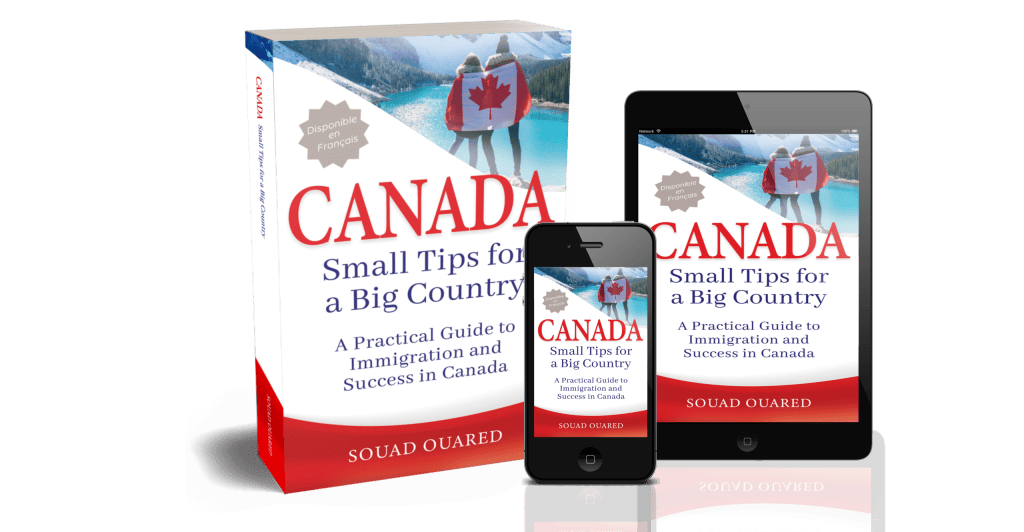
CANADA: Small Tips for a Big Country is a practical guide with a deeply human touch. Drawing on her own journey as an immigrant, more than 30 years of life in Canada, and the experiences of thousands of newcomers she has met and worked with, author Souad Ouared shares real-life advice that goes beyond what you can simply find online. From housing and employment to finances, culture, and everyday life, she shares what successful newcomers do differently, the mistakes to avoid, and the little things she wishes every newcomer knew.