

Moving to Canada is an exciting new chapter—but it can also come with a steep learning curve. From finding a place to live and getting your documents in order to understanding Canadian banking, healthcare, transportation, and workplace culture, there is a lot to learn.
Many newcomers to Canada make similar mistakes during their first few weeks and months. The good news? Most of them are avoidable.
Whether you are moving to Canada for work, study, family, or a fresh start, knowing what to expect can make your transition much easier.
If you’re still preparing for your move, our Ultimate Moving to Canada Checklist can help you organize what to do before you leave and what to prepare for your arrival.
Here are 10 common mistakes newcomers make when they arrive in Canada—and what you can do instead.
1. Trying to Do Everything at Once
Arriving in a new country can feel overwhelming. You may want to immediately find a job, secure an apartment, open a bank account, buy a phone, arrange transportation, and build a social circle.
Trying to accomplish everything at the same time can quickly lead to stress and unnecessary expenses.
What to do instead
Create a newcomer checklist and prioritize your most important tasks.
Start with essentials such as:
- Getting your important documents organized
- Finding temporary accommodation if necessary
- Applying for or obtaining required government documents
- Opening a Canadian bank account
- Getting a Canadian phone number
- Finding healthcare information
- Looking for long-term housing
- Starting your job search
You don’t need to have your entire Canadian life figured out during your first week.
Give yourself time to adjust.
Once you’ve arrived, it can help to focus on your most important priorities first. Our guide to Your First 30 Days in Canada walks through some of the practical things newcomers may need to do during their first month.
2. Choosing Housing Without Researching the Neighborhood
One of the biggest challenges when moving to Canada is finding affordable housing.
Newcomers sometimes choose an apartment simply because the rent appears affordable. However, the cheapest apartment isn’t always the best option.
Consider more than just monthly rent.
Research:
- Public transportation
- Distance to work or school
- Grocery stores
- Healthcare facilities
- Schools and childcare
- Safety and neighborhood conditions
- Heating costs
- Parking
- Internet availability
- Additional rental fees
Remember that Canada is a very large country, and the cost of living can vary significantly between cities and provinces.
Newcomer tip
Before signing a long-term lease, research the neighborhood and understand what is included in the rent.
An apartment that looks inexpensive may become much more expensive after utilities, transportation, parking, and other expenses are added.
For more guidance on rental applications, deposits, leases, proof of income, neighborhoods, roommates, and rental scams, read How to Find a Place to Live in Canada: A Newcomer’s Guide.
3. Underestimating the Cost of Living in Canada
Another common mistake is arriving in Canada with an unrealistic idea of how much everyday life will cost.
Rent is often the biggest expense, but newcomers should also budget for:
- Groceries
- Transportation
- Phone and internet
- Utilities
- Winter clothing
- Insurance
- Healthcare-related expenses
- Household items
- Taxes
- Entertainment and personal expenses
The cost of living in Canada varies greatly depending on where you live.
Toronto and Vancouver, for example, can have very different housing costs from smaller cities and communities.
What to do instead
Create a realistic monthly budget before moving and maintain an emergency fund whenever possible.
Understanding your expenses early can help you avoid unnecessary debt and financial stress.
If you’re still preparing for your move, 17 Things You Should Know Before Moving to Canada covers several practical considerations worth knowing before you arrive.
4. Waiting Too Long to Build a Canadian Credit History
Understanding credit in Canada is extremely important for newcomers.
Your credit history can influence your ability to access certain financial products and services, and building credit takes time.
A common mistake is assuming that your credit history from another country will automatically transfer to Canada.
What to do instead
Learn how the Canadian credit system works as soon as possible.
Depending on your situation, you may be able to start building Canadian credit by responsibly using a credit card or other appropriate financial products.
The key is responsible financial behavior:
Pay your bills on time, keep your balances manageable, and understand what affects your credit score.
Don’t treat credit as free money.
For a beginner-friendly explanation of the Canadian credit system, read How Credit Works in Canada for Newcomers: A Beginner’s Guide to Building Credit.
5. Assuming You Need Canadian Experience Before Applying for Jobs
Many newcomers worry:
“I don’t have Canadian work experience, so no employer will hire me.”
This can prevent qualified newcomers from applying for jobs they are capable of doing.
While Canadian work experience can sometimes be helpful, it isn’t necessarily the only thing employers consider.
Your:
- Education
- Previous professional experience
- Skills
- Certifications
- Communication abilities
- Technical knowledge
- Adaptability
can all be valuable.
What to do instead
Adapt your résumé to Canadian job-search practices and focus on skills and achievements, not simply job responsibilities.
Network with professionals in your industry, attend career events, explore newcomer employment programs, and apply strategically.
Don’t automatically reject yourself before an employer has had the opportunity to consider you.
For more practical advice, read Finding Your First Job in Canada: A Newcomer’s Guide.
6. Ignoring the Importance of Networking
Finding a job in Canada isn’t always about submitting hundreds of résumés.
Networking can play an important role in your career and settlement journey.
Many newcomers make the mistake of waiting until they need a job before developing professional connections.
Start networking early
You can:
- Attend industry events
- Join professional associations
- Connect with professionals on LinkedIn
- Participate in community organizations
- Attend newcomer employment programs
- Volunteer
- Reconnect with former colleagues who may have Canadian connections
Networking isn’t about asking everyone for a job.
It’s about building genuine professional relationships over time.
7. Not Preparing for Canadian Weather
If you’re moving to Canada from a warmer climate, winter can be a major adjustment.
Canadian winters can bring extremely low temperatures, snow, ice, and shorter daylight hours depending on where you live.
A common newcomer mistake is buying a large amount of winter clothing without understanding what they actually need—or waiting until the coldest weather arrives.
What to do instead
Learn about the climate where you will live and invest in appropriate clothing gradually.
Depending on your location, you may need:
- A quality winter coat
- Insulated boots
- Gloves or mittens
- A warm hat
- Thermal layers
- Winter socks
- Snow pants for certain activities
And remember: winter preparation isn’t only about clothing.
Learn how to travel safely in snow and ice, understand local transportation, and prepare your home for cold temperatures.
If you’re preparing before leaving your home country, our Ultimate Moving to Canada Checklist also includes practical reminders about preparing for Canada’s climate.
8. Assuming Healthcare Works the Same Way Everywhere
Canadian healthcare can be confusing for newcomers because the system may work differently from what they experienced in their home country.
Many newcomers assume that every healthcare service is automatically free or immediately available.
That’s not always the case.
Healthcare coverage and eligibility can depend on your province or territory and your immigration or residency situation.
What to do instead
Research healthcare services in your province as soon as you arrive.
Find out:
- How to apply for provincial health coverage
- Whether you are eligible
- Where to find a family doctor
- Where to go for urgent medical needs
- What services may not be covered
- Whether private insurance may be appropriate during a waiting period
Understanding the system before you need it can save you considerable stress.
9. Not Learning Canadian Social and Workplace Culture
Moving to Canada isn’t only about learning how to manage paperwork and finances.
You’re also adapting to a new culture.
Canadian communication and workplace expectations may differ from what you are accustomed to.
For example, newcomers may need time to become comfortable with:
- Workplace communication
- Punctuality
- Personal space
- Professional boundaries
- Teamwork
- Workplace hierarchy
- Giving and receiving feedback
- Small talk
- Networking
These differences don’t mean one culture is better than another.
They’re simply differences worth understanding.
Newcomer tip
Observe, ask questions, and remain open to learning.
At the same time, don’t feel that you have to abandon your own identity or culture.
Canada is a multicultural country, and your background is part of what you bring to your new community.
10. Trying to Figure Everything Out Alone
Perhaps the biggest mistake newcomers make is believing they have to handle everything themselves.
Moving to another country is a major transition. Fortunately, there are many organizations, communities, settlement services, and people who can help.
Look for legitimate newcomer resources that can assist with:
- Employment
- Housing
- Language learning
- Government services
- Education
- Community integration
- Financial information
- Settlement support
Don’t be afraid to ask questions.
Asking for help isn’t a sign of weakness. It’s a smart part of settling into a new country.
Bonus Tip: Don’t Expect Everything to Happen Immediately
One of the most important lessons for newcomers to Canada is to be patient.
Your first job may not be your dream job.
Your first apartment may not be your ideal home.
Your first winter may be challenging.
And building a new social and professional network takes time.
That’s normal.
Starting over in a new country is a process—not a one-day event.
Focus on progress rather than perfection.
Your First Months in Canada: Focus on the Basics
Instead of trying to accomplish everything immediately, focus on establishing a strong foundation.
Your newcomer priorities can include:
1. Documents
Make sure your important identification and immigration documents are organized.
2. Housing
Find safe and suitable accommodation that fits your budget.
3. Banking
Understand Canadian banking and start establishing responsible financial habits.
4. Healthcare
Learn about healthcare coverage and available services in your province.
5. Employment
Update your résumé, start networking, and explore employment opportunities.
6. Transportation
Learn how public transportation or driving works in your community.
7. Community
Start meeting people and discovering local resources.
8. Budgeting
Track your income and expenses carefully.
9. Weather preparation
Prepare for the climate where you live.
10. Building your new life
Give yourself time to adjust, learn, and grow.
For a more detailed step-by-step approach to your first month, read Your First 30 Days in Canada: What You Need to Do.
Souad Tips: Moving to Canada Doesn’t Come With an Instruction Manual – But It Should
Every newcomer experience is different.
The city you choose, your immigration status, your profession, your family situation, your budget, and your personal goals can all affect your experience in Canada.
That’s why preparation matters.
The more you understand before and after you arrive, the fewer surprises you’ll face.
And sometimes, it’s the small tips that make the biggest difference.
Want More Practical Tips for Life in Canada?
From finding your way around Canadian systems to understanding everyday life, CANADA: Small Tips for a Big Country was created to help newcomers feel more prepared and confident.
Whether you’re planning to move to Canada, preparing for your arrival, or already building your new life here, the book offers practical tips and insights to help you navigate your Canadian journey.
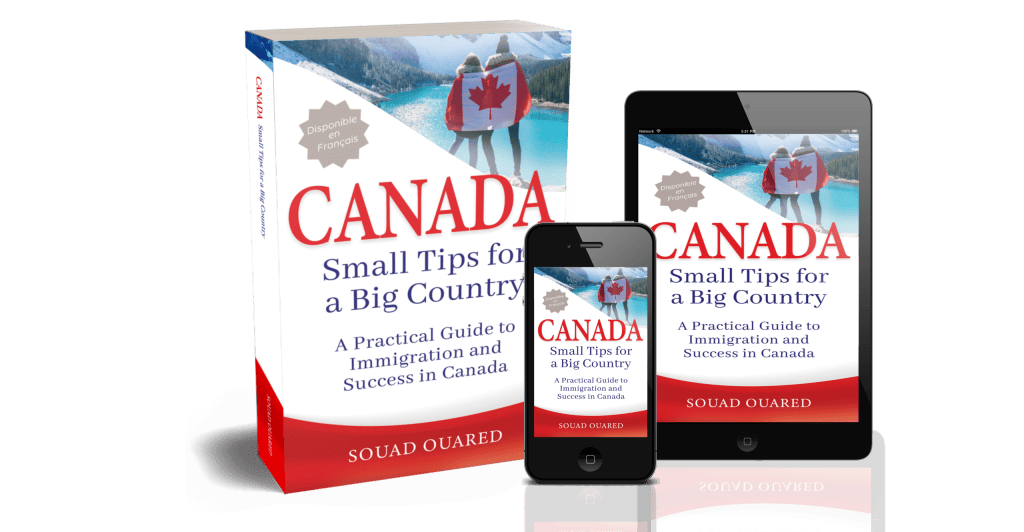
CANADA: Small Tips for a Big Country is a practical guide with a deeply human touch. Drawing on her own journey as an immigrant, more than 30 years of life in Canada, and the experiences of thousands of newcomers she has met and worked with, author Souad Ouared shares real-life advice that goes beyond what you can simply find online. From housing and employment to finances, culture, and everyday life, she shares what successful newcomers do differently, the mistakes to avoid, and the little things she wishes every newcomer knew.